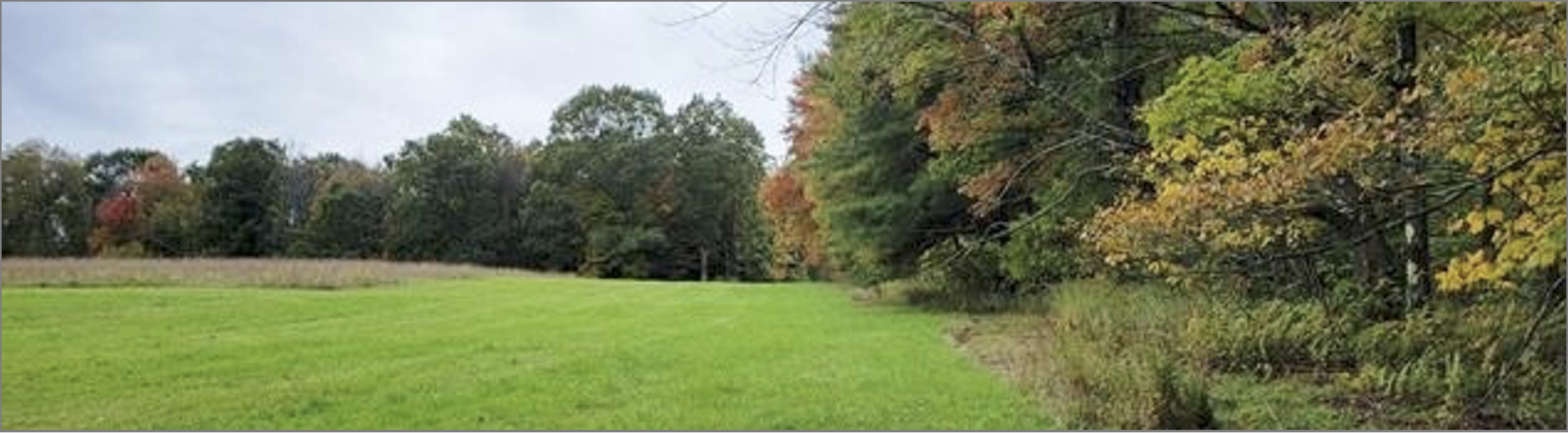
What Will Become of Your Land?
Planning today to protect your land, your legacy, and your family’s future
The Edward L. Rose Land Conservancy
PO Box 8
Montrose, PA 18801
elrose.org
Many landowners worry about what will happen to their land when they are no longer here. They want to protect the fields, forests, and waterways they love, avoid unintended consequences for their families, and ensure that future generations experience the land as they did.
The Edward L. Rose Conservancy (ELRC) is here to help you explore your options—confidentially, voluntarily, and at your own pace—so you can make informed decisions today that preserve your land for tomorrow.
ELRC is a local, nonprofit land trust dedicated to conserving natural, agricultural, and scenic resources in Susquehanna County and the southern tier of New York. Through preservation, conservation, and education, we work with landowners and community partners to protect irreplaceable land while respecting private ownership. The Edward L. Rose Conservancy is a 501(c)(3) tax‑exempt nonprofit organization qualified to hold and enforce conservation easements.
Are you concerned that:
- One day your land could be developed or used in ways you would not choose?
- Your children or grandchildren may never know the natural landscape you cherish?
- Your land might have to be sold to pay estate taxes unless you plan ahead?
If any of these questions resonate with you, you are not alone—and there are options available.
Across New York and Pennsylvania, thousands of acres of open land are lost to development every year. Once land is developed, it is rarely returned to open space or agriculture.
Your land is a unique and valuable resource
Your land is more than an asset. It may be farmland that has supported generations, woods that provide quiet and wildlife habitat, or wetlands that protect water quality. It may feel as though land will always be there but its future is not guaranteed unless steps are taken to protect it.
Many landowners across the country are choosing to take an active role in shaping the future of their land. Today’s land preservation tools allow you to decide how your property will be used in the future—without giving up ownership or compromising your family’s financial security.
All land preservation options offered through ELRC are entirely voluntary and based on your conservation objectives.
Options for protecting your land
If you wish to preserve your land for the future, several approaches are available. While each option shares the goal of limiting inappropriate development, they differ in effectiveness and permanence.
Deed restrictions
You may place development restrictions directly on your property deed. However, deed restrictions can be difficult to enforce and may be challenged or removed over time, especially if no organization remains to monitor them.
Local zoning regulations
Zoning ordinances are created and enforced by local governments. Because zoning laws can change with political or economic pressures, they do not provide permanent protection.
Passing land to heirs with informal expectations
Many landowners hope their children or grandchildren will carry out their wishes. While intentions may be good, circumstances and financial pressures can change, and there is no guarantee the land will remain protected.
Selling development rights through agricultural preservation programs
Some counties offer programs that purchase development rights. These programs have eligibility requirements and may result in tax liabilities if payment is received.
Donating a conservation easement
For many landowners, a conservation easement offers the most flexible and enduring option. You retain ownership of your land while legally defining how it may—and may not—be used in the future. Conservation easements are permanent and are enforced by a qualified organization such as ELRC.
Conservation easements
A conservation easement is one of the strongest tools available for protecting land. Easements help conserve farmland, forests, wildlife habitat, scenic views, water resources, and even historic sites—while keeping land in private ownership.
Because a conservation easement is held by a nonprofit organization or public agency that is legally obligated to enforce it, easements are generally more durable than deed restrictions or zoning regulations.
What is a conservation easement?
A conservation easement is a voluntary legal agreement between a landowner and a qualified conservation organization or public agency. The agreement limits certain types of development in order to protect the land’s conservation values.
Each easement is tailored to the individual property and the landowner’s goals. It may apply to all or part of the property and is recorded with the land records. Once in place, the easement “runs with the land,” meaning that all future owners are bound by its terms.
What kinds of property can be protected?
Conservation easements may be placed on properties of any size that have conservation, agricultural, or historic value. These include farms, forests, wetlands, wildlife habitat, scenic areas, and historic structures.
A voluntary partnership
Creating a conservation easement is a collaborative process. The landowner and ELRC work together to define how the land will be protected and used in the future.
Typically, the process includes:
- Defining the landowner’s goals and priorities
- Preparing a survey if needed
- Completing a baseline documentation report that describes the property’s current condition
- Drafting the easement language together
The landowner retains ownership of the property and can continue to live on, work, sell, or pass on the land—subject to the easement’s terms. Landowners are encouraged to consult their own attorney and tax advisor during this process.
Benefits for landowners—personal and financial
Landowners often tell us that establishing a conservation easement brings peace of mind. Knowing that their land will be protected according to their values—and that future generations will benefit—can be deeply satisfying.
In addition, conservation easements may offer financial advantages. Depending on individual circumstances, an easement may reduce income taxes, estate taxes, and property taxes. In some cases, an easement is an important part of long‑term financial and estate planning.
Potential tax considerations
The following is a general overview. ELRC does not provide tax or legal advice, and landowners should consult qualified professionals.
Income tax
A donated conservation easement may qualify as a charitable tax deduction if it is perpetual and donated exclusively for conservation purposes to a qualified organization. The value of the deduction is generally based on the difference between the property’s value before and after the easement.
Estate tax
Estate taxes are typically based on a property’s fair market value. A conservation easement can reduce that value, which may help lower estate taxes and reduce the likelihood that heirs will need to sell land to pay them.
Property tax
In many cases, restricting development potential can reduce property tax assessments. Any reduction depends on local assessment practices.
Your local preservation resource
Every landowner and every property is different. ELRC offers local knowledge, experience, and long‑term stewardship to help you evaluate whether a conservation easement—or another option—fits your goals.
Our role is to provide information, answer questions, and help you explore your choices. There is no obligation to proceed.
Flexibility for your future
Conservation easements are designed to reflect both the character of the land and the needs of the landowner. Depending on your goals, an easement may allow for additional buildings, agricultural uses, forestry, or other activities.
The specific terms are shaped by the property’s features and your personal, family, and financial considerations. ELRC works with you to ensure the easement is practical, clear, and aligned with your long‑term vision.
Costs to consider
While each situation is unique, landowners are generally responsible for certain costs associated with creating a conservation easement, which may include:
- Property surveys or appraisals
- Legal fees
- A contribution to ELRC’s easement stewardship fund to support long‑term monitoring and enforcement
Some of these costs may be tax‑deductible.
Do conservation easements work?
Yes. Nationwide, millions of acres are protected by conservation easements. Landowners who choose this option share a commitment to preserving the natural, scenic, and agricultural character of their communities for generations to come.
Preserve your land—forever!
Once a conservation easement is in place, its terms apply to both current and future owners. You continue to own and use your land, with the assurance that its conservation values will be protected over time.
If you are thinking about the future of your land, ELRC invites you to contact us for a confidential, no‑obligation conversation. Exploring your options today can provide clarity—and peace of mind—for tomorrow.
==============================================================================
Contact:
The Edward L. Rose Land Conservancy
PO Box 8
Montrose, PA 18801
(570)-432-0162
Edward L. Rose Conservancy is a 501(c)(3) nonprofit organization
eligible to receive tax-deductible donations.